Critics say a profit-first model for USPS would shutter post offices and raise prices; New Hampshire’s Rep. Chris Pappas seeks guardrails.
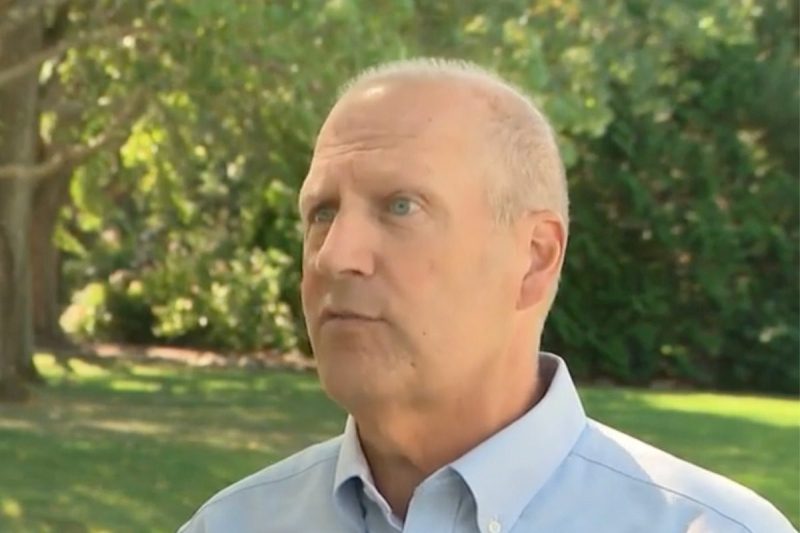
Former US Sen. John E. Sununu has for years argued that the US Postal Service (USPS) should be shut down and privatized—a stance that has resurfaced as he mulls a run for the state’s open US Senate seat. Meanwhile, New Hampshire communities have experienced slower mail and service reductions this year.
In a 2012 Boston Globe letter, Sununu held up Elon Musk as the primary argument for getting rid of the USPS, saying that if companies like Musk’s SpaceX can deliver space services to the government, a similar company could also deliver mail more efficiently than an existing government agency.
“While there may be many things that government should do…. SpaceX reminds us how short that list really is” Sununu wrote in his column, which glorified Musk.
And then came Trump, who deployed Musk to shrink the government and its services in January 2025.
Musk’s time at the helm of the Department of Government Efficiency (DOGE) was marked by deep cuts to federal programs and agencies that will cost US taxpayers $135 billion this fiscal year according to a nonpartisan research and advocacy group’s analysis.
Reporting on DOGE’s work also shows it “drastically exaggerated” the scale of its work – claiming they saved taxpayers $54.2 billion while only $1.4 billion of it was actually verified.
Sununu’s Musk-like approach to government met with a fresh round of USPS service cuts in 2025 that critics say will hit small towns first.
A 2024 report warned rural New Hampshire could see slower delivery under policy shifts this year. At the same time, the Postal Regulatory Commission’s review of USPS’s FY2025 Performance Plan shows the agency lowered on-time targets for First-Class Mail to 87% (2-days) and 80% (3- to 5-days)
USPS is also rolling out Regional Transportation Optimization (RTO)—ending end-of-day collections at post offices more than 50 miles from a regional hub so that outgoing mail is picked up the next morning, often adding a day to delivery.
On the ground, New Hampshire postal workers have been explicit about what privatization and slowdowns could mean.
On March 20, 2025, workers protested in Manchester and Concord, warning that a profit-first model would shutter small offices and push up prices—with towns like Berlin cited as especially vulnerable.
Federal watchdogs and analysts have repeatedly said USPS’s universal delivery network functions as critical infrastructure that private actors cannot readily replicate, especially for the “last mile” in rural America.
Meanwhile New Hampshire Democrat US Rep. Chris Pappas has moved to build bipartisan guardrails around USPS’s public mandate. In July 2025, he helped launch the Congressional Postal Service Caucus with Democrats and Republicans to protect rural access and oppose harmful consolidations and privatization. In March, he backed the Protect Postal Performance Act to restrict downsizing in underserved areas and add transparency around delivery-standard changes.