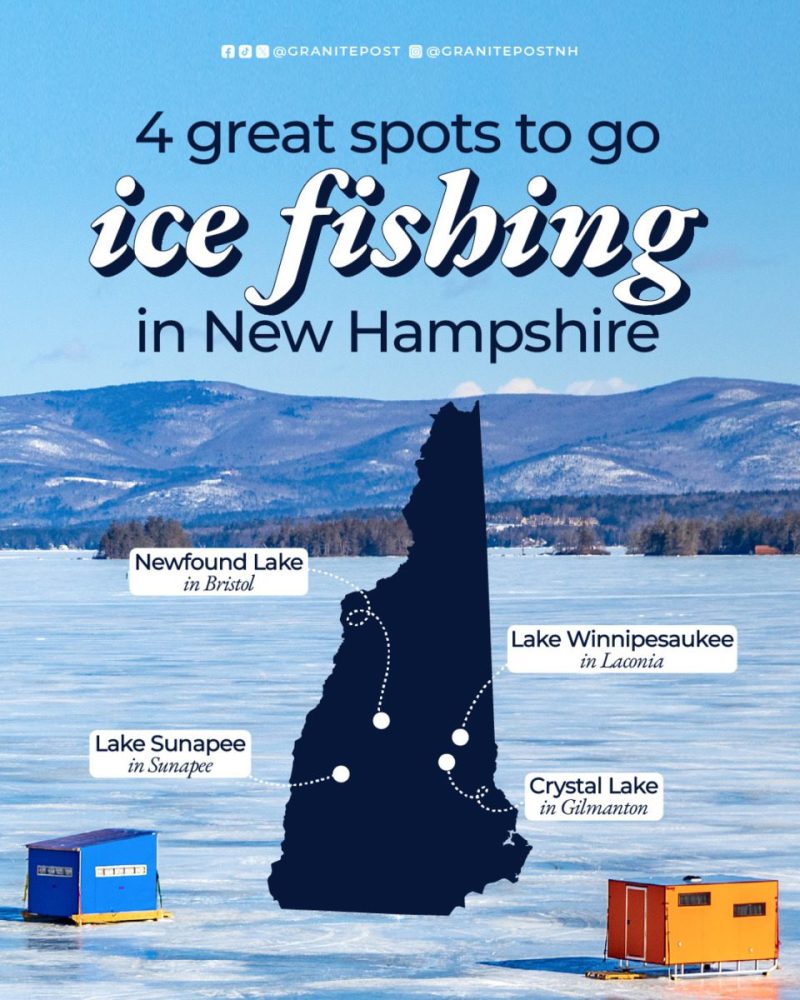
If you’ve always wanted to try ice fishing, here’s your chance. New Hampshire’s Free Ice Fishing Day is coming up on Saturday, Jan. 19. This annual event allows residents and non-residents to fish without a license for a day.
FYI, you’ll still need to follow the state’s regulations, which you can read more about here.
If you’re a first-timer, here are some tips to help you get started:
🎣 1. Safety First
• Check ice thickness: Make sure the ice is at least 4-6 inches thick for safe foot traffic. Use an ice chisel or auger to check thickness as you walk onto the ice.
• Wear proper clothing: It will probably be colder out there than you think. Dress in layers, wear waterproof boots, gloves, and a hat.
• Bring safety gear: Carry ice picks (in case you fall through the ice), a life jacket, and a rope for emergencies.
• Bring snacks: This goes without saying.
🎣 2. Gear You’ll Need
• Ice Auger: This tool is used to drill holes in the ice. Hand augers are great for beginners, but power augers make it quicker.
• Ice Scoop: To scoop out slush and ice from the hole after drilling.
• Ice Fishing Rod and Reel: These are shorter and sturdier than regular rods, designed for fishing in small holes.
• Tip-ups: These are devices that sit over the hole and raise a flag when a fish bites. You can use them in addition to rods.
• Bait: Common baits include live minnows, worms, or maggots, as well as artificial lures like jigs.
• Bucket/Chair: Bring something to sit on while waiting, and a bucket to carry your gear and catch.
🎣 3. Drilling
• Drill the hole: Use your auger to drill a hole, then clear out the ice shavings with your scoop. Holes should be around 6-8 inches in diameter.
• Set up tip-ups or rods: Drop your bait into the hole, making sure it sinks near the bottom. Set your tip-up or place your rod securely near the hole.
Check out more tips from the state.
And if you’re lucky enough to catch a fish, use this handy guide to identify it.