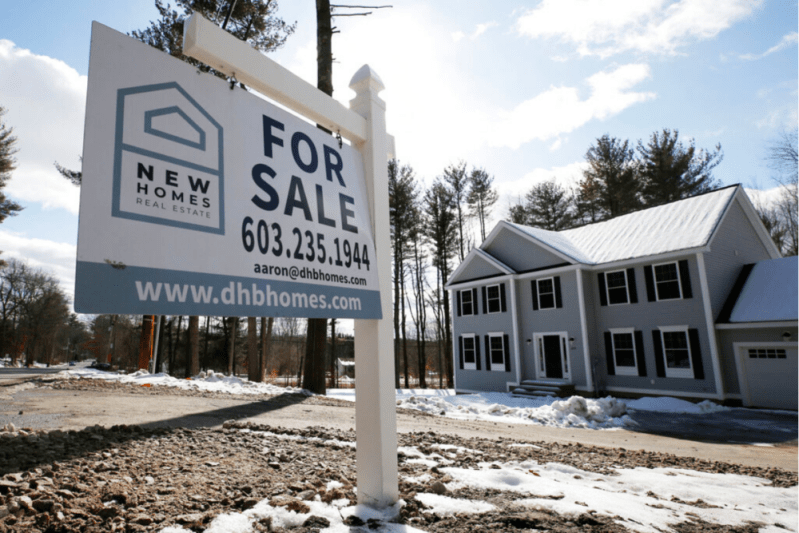
New data from the New Hampshire Fiscal Policy Institute has shown the depth of the housing crisis facing the Granite State. Here’s a look at the numbers:
Housing shortage by the numbers
🏠 New Hampshire needs 23,500 more housing units to meet current demand and 90,000 additional units by 2040.
🏠 The median price for single-family homes has increased by 275% over the past 25 years.
🏠 Since the start of the pandemic (June 2020), housing prices have jumped 63.3%.
🏠 The current median sale price for a single-family home: $540,000.
🏠 New homeowners face approximate monthly payments of $3,957 (including mortgage and property taxes).
🏠 Median monthly rent for a two-bedroom apartment: $1,833 (a 36% increase since 2019).
Who’s most affected
🏠 51% of renters are considered “housing cost burdened” (paying more than 30% of income toward housing).
🏠 Based on median household income, affordable housing in NH should cost no more than $2,420 monthly.
How we got here
🏠 Aging population (20.8% of residents are 65+) with many seniors aging in place.
🏠 Shrinking household sizes (from 2.47 in 2013 to 2.39 in 2023).
🏠 Sharp decline in housing construction (9,000+ permits annually in 2004-2005 vs. just 2,101 in 2011).
🏠 Impact of seasonal homes and short-term rentals (8.8% of housing statewide is seasonal).
🏠 43.6% of short-term rentals in NH are owned by out-of-state hosts.
The impact
🏠 Worker shortage: NH has nearly two open positions for every unemployed resident.
🏠 Increasing homelessness: 49.5% rise since 2020 and 13% increase since 2022.
🏠 Disproportionate effects on families (45.8% increase in homelessness) and seniors (12.5% increase).
🏠 Rising student homelessness: 7% increase between the 2021-2022 and 2022-2023 academic years.