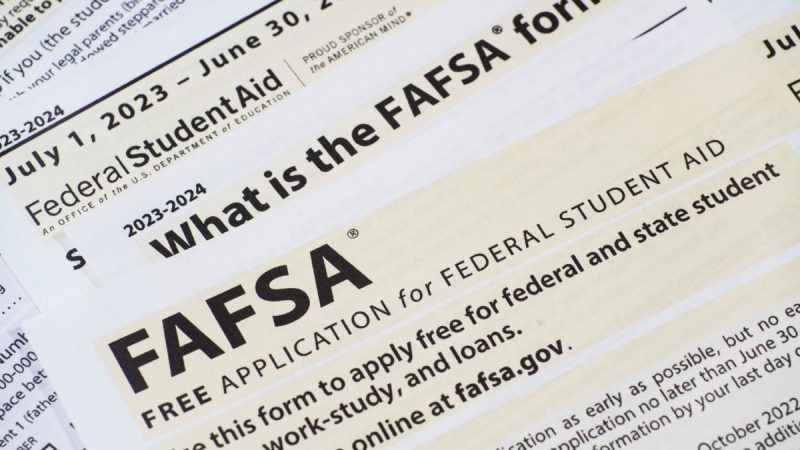
College students with siblings are about to see higher tuition bills with changes to the Free Application for Federal Student Aid (FAFSA) funding formula.
FAFSA, the Department of Education-run program that provides financial aid to college-going students, revised its rules earlier this year after a federal law passed in 2020. One of the new policies calls for an end to sibling discount on tuition.
For example: If a family that had two children in the college system was formerly expected to pay $20,000 in family contribution, it would pay $10,000 for each child. However, under the new rules, this won’t be the case, and the expected family contribution would apply to both children, bringing up the total out-of-pocket expense for the family to $40,000.
Overall in the country, almost 34% students enrolled at four-year colleges have siblings, according to a recent Brookings report.
Elizabeth Keuffel, the assistant vice president for enrollment and director of financial aid at Saint Anselm College, told the Concord Monitor 20-25% of the returning student population will be impacted by the changes.
In addition to an increase in tuition for students, there were also massive delays reported in FAFSA rollouts this year, amidst the new changes.
Experts say that the delays in rolling out aid would push more students into debt, and in cases of low-income students, delay their college education entirely.